What Happens During a Professional Tree Trimming Appointment: Step-by-Step Process
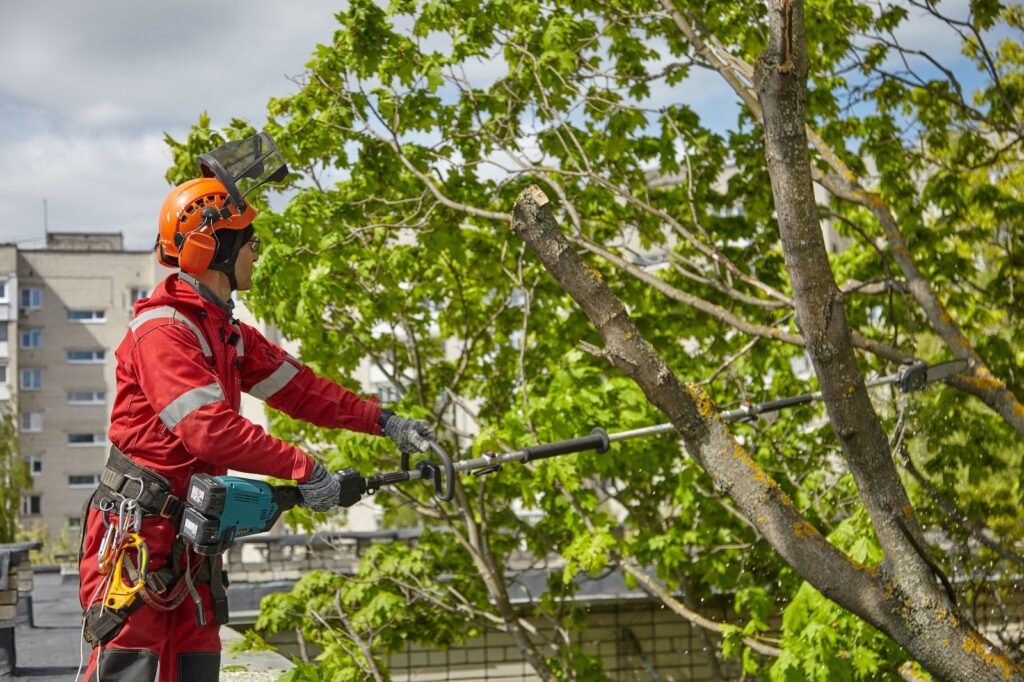
You typically won’t realize how important your trees are until one starts causing problems. After a storm, a massive branch begins hanging over your roof. Your living room has lost its sunlight because a tree has grown too close. And perhaps worse, a cracked branch is dangling over your driveway. Generally, this is the time that most homeowners start considering tree trimming services. But what happens when a tree trimming service comes to your house? What are the tools of the trade? What do they consider when deciding which branches to cut? How do they make clean cuts not to harm the tree and endanger your home? Join us as we describe a tree trimming service step-by-step, so you’ll know what to expect from their arrival to the final cleanup. 1. On-Site Arrival and Property Assessment The appointment itself starts a long time before the first branch is cut. Assessment of tree health is done in a structured manner by a certified ISA arborist or crew leader. It is no quick look at the canopy, it is a detailed one, comprising: The timing of pruning is also an issue that is taken into account by the arborist as well depending on the season of pruning. As an illustration, late winter pruning promotes robust spring growth, whereas pruning in summer might be useful in regulating excessive growth. They will talk about your ambitions too: It is a phase defining the priorities in safety as well as aesthetic goals. 2. Safety Setup and Equipment Preparation Crews of professionals do not start cutting at once. They prepare the place of operation in a safe way. This includes: Every crew member wears: In urban areas such as New York City, there is always a lack of room and thus advanced rope rigging methods are necessary to ensure limbs do not destroy adjacent properties. This is a disciplined method and keeps the activities of professionals independent of dangerous DIY cutting. 3. Crown Cleaning: Removing Dead and Hazardous Branches The first actual trimming phase is typically crown cleaning. This step focuses on removing: Each cut is deliberate. Arborists use the three-cut method to prevent bark tearing: The branch collar is critical—it contains specialized cells that help seal wounds naturally. Cutting too close (flush cut) damages the tree’s defense system. Cutting too far leaves a stub that invites decay. This step improves safety and restores structural integrity. 4. Crown Thinning for Light and Airflow After the removal of hazardous limbs, the crew proceeds to the crown thinning. This is not an arbitrary cutting off of branches. It is a strategically downsizing of interior branches to: Professional thinning preserves the natural form of the tree and also decreases the density of the tree by about 10- 25 percent, depending on the species and health. Poor thinning is commonly referred to as lion-tailing, which causes excessive interior growth to be removed leaving the foliage at the ends of the branches. This compromises strength of structure. Experienced arborists do not repeat this error by ensuring that branches are distributed evenly. 5. Crown Raising for Clearance When your trees are too low and are dangling on sidewalks, driveways or buildings, the crew does crown raising. This entails amputation of lower limbs to attain: Arborists are however guided by strict guidelines. Excessive cutting of lower branches may make a tree top-heavy, and leave the bark to the injury of sunscald. This is determined by the diameter of the trunk and structural support. 6. Crown Reduction (If Necessary) In case the tree has become too big in its location, then crown reduction pruning can be advised. This is quite contrary to topping. Reduction pruning includes instead of snipping of the top flat (which is detrimental and produces poor regrowth): Trees near buildings or power facilities should be reduced, and this usually happens to the crown of a tree. 7. Structural Pruning for Young Trees If the appointment involves a young tree, arborists focus on structural pruning. This establishes: Correct structural pruning reduces future storm damage risk and minimizes long-term corrective trimming costs. 8. Precision Cutting Tools Used During the appointment, professionals use specialized tools including: Tools are disinfected between cuts when disease is present to prevent pathogen transmission. 9. Debris Management and Cleanup After trimming, the job isn’t finished. Professional service includes full debris management: Homeowners may choose to keep mulch from chipped wood for landscaping use. The property should look cleaner than before work began. 10. Final Inspection and Client Walkthrough Before leaving, the arborist performs a final inspection: They then walk the property with you, explaining what was done and recommending future maintenance intervals. Most mature trees benefit from trimming every 2–3 years, though fast-growing species may require annual service. Conclusion In order to ensure the protection of the property and the tree, tree trimming involves decades of experience and knowledge of the inner workings of tree anatomy. When trimming is performed correctly, it is proven to increase the value of your property, and ensure the tree grows in a healthy manner and provides the tree with structural support, and increases the overall safety of the area. The only practice that will ensure the continued health of a tree for the duration of it’s life is pruning performed in accordance with proper standards. The only tree care service that provides the level of experience required for the proper care of the trees in your care is NYC Tree Trimming. This is the only service that supports modern, practice based tree care for the urban landscape.
NYC Tree Trimming Laws: What You Can and Can’t Do Legally
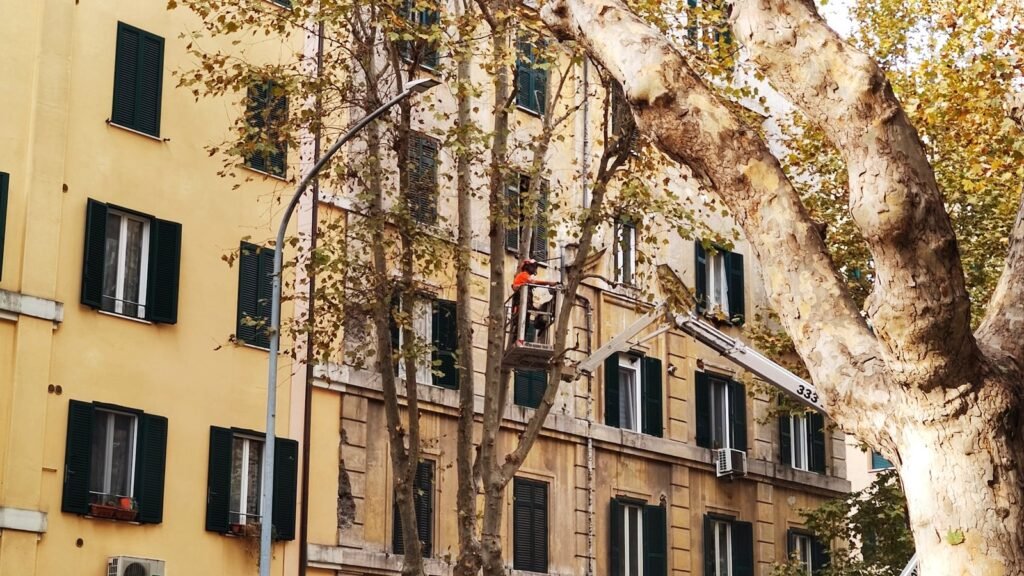
Can you trim the tree in front of your house in NYC legally — or could that simple weekend project possibly earn you a big-ticket fine? Many New Yorkers think that because a tree grows near their property, they assume that they are able to cut it. This is wrong. NYC Tree Laws are very strict, and planning violations result in severe penalties. NYC is very protective of their trees, and their laws are very strict for a reason. There are over seven million trees in NYC, and the city treats them as infrastructure rather than mere landscaping. From Manhattan to Staten Island, the same laws apply, but they choose to enforce them differently depending on the location and the trees. The First Legal Question: Is It a Street Tree or a Private Tree? You have to first identify the kind of tree that is to be trimmed as being a street tree or a private property tree. Any tree that has been planted on the city owned land is considered a street tree and it is generally planted in a pit located in the sidewalk between the curb and the property line. It does not belong to you even when it is right in front of your house. These trees are in the New York City Department of Parks and Recreation that is usually known as NYC Parks. When the trunk of the tree falls within your property line, that is, in your back yard, the general rule is that it is a private tree and other rules do not apply. This is the area where homeowners become trouble makers: it is against the law to trim a tree along the street without permission, even when their branches are shading your window, or their debris is littering your driveway. What You CANNOT Do to a NYC Street Tree The actions that are prohibited without any authorization according to the NYC Administrative Code are as follows: Pruning even in a small scale, needs approval in the city. Illegal logging may lead to fines amounting to between 1,000 and 15,000 per tree, according to the extent of damage. Cases of willful destruction that are severe can lead to civil penalties that are expressed in per inch of trunk diameter. Most of the locals feel a minor branch cutting will not hurt. But incorrect pruning may cause the tree canopy to become unstable, form dangerous limb arrangements or bring diseases like oak wilt or Dutch elm disease which is actively managed by NYC. Contractors are permitted to legally do work on the street trees only if they have a NYC Parks Tree Work Permit, and frequently an accreditation as a Certified Arborist (ISA Certified Arborist). The NYC Tree Work Permit Process Should a street tree need to be pruned, say, if it is causing utility wires to be destroyed or if it is obstructing signs or is an obstacle to pedestrian safety, then the correct procedure is to request it to be done via NYC Parks. Whether the tree qualifies in the city, the city considers whether the tree is: The city does the work in most instances at no cost, but schedules might change based on borough, workload and season. In case of immediate danger say by a broken limb over a sidewalk, the residents are asked to report to NYC Parks Forestry Division or call 311 to report the dangerous state of the tree. The desire to circumvent the permit system may subject property owners to the inspection of enforcement and stop-work orders. What You CAN Legally Do to a Private Tree When the tree is completely within your property, then you usually have the right to prune the tree or cut it down. This does not, however, imply that restrictions are not present. New York City still controls some situations with personal trees: 1. Historic or Landmark Properties. In the event your property is subject to regulation by the New York City Landmarks Preservation Commission, any removal of trees or significant changes in its nature may be subject to approval, particularly where the tree is part of the historic nature of the property. 2. Species and Environmental Reserves. Other environmental compliance may be necessary in some waterside or environment sensitive areas. 3. Shared Property Lines In case when the branches reach the land of a neighbor, the New York law permits the neighbor to cut the overgrowing branches, however, within the premises and without injuring the general well-being of the tree. Civil liability may also arise in the manner of poor cutting leading to the death of the tree. Sidewalk Damage and Tree Roots: Who Is Responsible? Sidewalk damage due to tree roots is one of the most misconceived parts of the NYC tree law. When the roots of a street tree raise or crack the sidewalk, homeowners are normally liable to repair the sidewalk but not cutting of roots. Unauthorized root cutting is highly forbidden and may cause the tree to become unstable and collapse posing a risk of injury to the tree. The New York City Department of Transportation should be approached to get a permit before undertaking the making of the sidewalk repairs. There are rules of protection that should be adhered to during repair to the tree pits in order to prevent root damage. Violation of these standards may lead to further fines in addition to the violations of sidewalks. Emergency Tree Situations: Storm Damage & Fallen Trees Many residents go on to do immediate cleanup after massive storms or hurricanes. Nevertheless, there is a limit of the law. Removal of street trees in NYC is taken care of by NYC Parks. The residents are not to cut or pull out fallen trees belonging to the city unless they are specifically approved. In the case of a fallen tree that belongs privately but falls on the premise of a public area a homeowner can still be liable to do clean up and in case